
The renewal of the UN Special Rapporteur’s mandate has reignited the standoff with Gitega, which denounces it as a “diplomatic weapon”. Why does continued international scrutiny provoke such hostility? By refusing to cooperate with the UN rapporteur, the government feeds the very distrust it seeks to dispel. By allowing him to work in Burundi, Gitega would enable national and international opinion to judge, on the basis of verified facts, whether human rights are being respected in the country.
This is nothing new. First came Brazil’s Paulo Sérgio Pinheiro, from 1995 to 1999, then Côte d’Ivoire’s Marie-Thérèse Keita Bocoum, from 1999 to 2004. Since 2022, the post has been held by Fortuné Gaétan Zongo of Burkina Faso. Three special rapporteurs, at different moments in Burundi’s history. All three went through the same ordeal. Or nearly so.
Distrust of international investigations predates these mandates. As early as 1988, after the Ntega and Marangara massacres, the authorities turned down a UN fact-finding mission, citing their sovereignty and their ability to conduct the investigations themselves.
From one crisis to the next, the obstacles have since taken different forms: in January 1996, insecurity prevented Paulo Sérgio Pinheiro from travelling to Burundi. In October 2016, the three experts of the UN independent investigation were declared persona non grata after publishing their report. The circumstances differ, but these episodes shed light on the long-standing difficulties facing international scrutiny of human rights in Burundi.
On 6 October 2026, the UN Human Rights Council renewed Zongo’s mandate for one year. The resolution passed with 22 votes in favour, 7 against and 17 abstentions. Keeping the mechanism in place thus commands sufficient support, but not consensus.
Gitega, for its part, rejects the decision. Élisa Nkerabirori, Burundi’s ambassador and permanent representative to the United Nations in Geneva, denounces “a targeted campaign of harassment and hegemonic interference by certain Western powers”. She accuses them of seeking to isolate the country and choke it economically under the guise of protecting human rights.
In her view, the mechanism is “a diplomatic weapon wielded to weaken the republican institutions of my country and to impose a form of domestic governance that serves their strategic, political and ideological interests”.
These accusations shift the debate onto the terrain of intentions. But they leave one question untouched: why does the Council still consider it necessary to keep an independent eye on Burundi?
Sovereignty and Commitments
Burundi is not the only state to challenge international oversight. The authorities are free to dispute the rapporteur’s work or the Council’s selectiveness. That criticism deserves a hearing: the Council is made up of states, each with its own alliances and interests.
But invoking sovereignty does not settle everything. By joining the UN, states also undertake to cooperate in promoting and respecting human rights. Special rapporteurs’ mandates are established by resolutions of the Human Rights Council; they are part of this international framework.
Denouncing the motives of a resolution’s sponsors is therefore not enough to refute the facts reported. Those facts call for precise answers.
Behind the Words, People and Lives
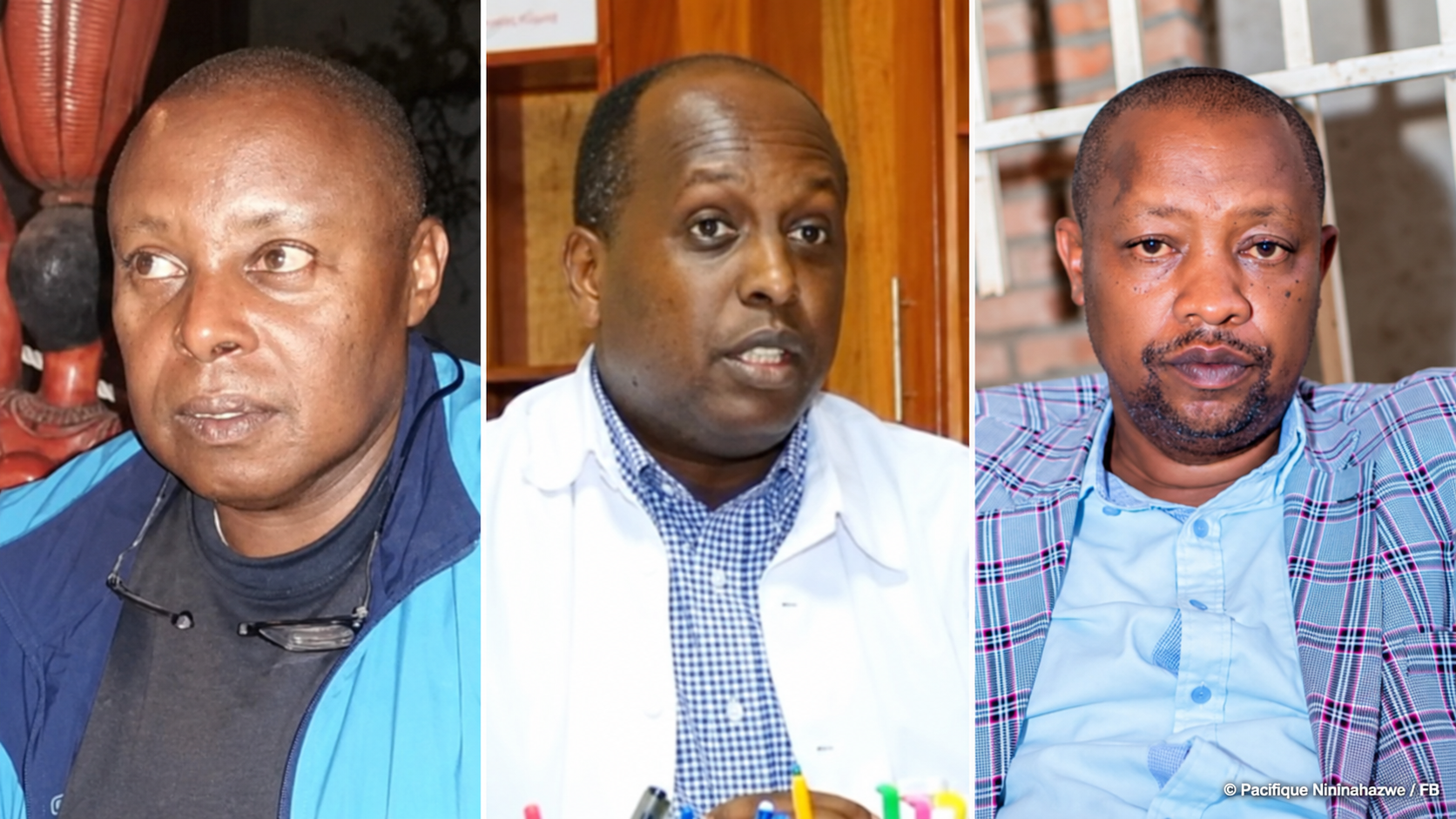
Emmanuel Mfitiye. At the Lycée du Lac Tanganyika, his students called him “Papa Bonheur”. A retired French teacher and a father of two. On 24 March 2025, he was bundled into a van in the heart of Gitega.
A post published a few days later in Les Carnets described his family’s search through prisons and detention cells, without finding any trace of him. He was diabetic and suffered from high blood pressure. The uncertainty over his fate was also a source of anguish for his health. Of “Papa Bonheur”, there is still no trace.
His case predates the period covered by Zongo’s latest report, which runs from July 2025 to June 2026. But more recent alerts show that abductions remain a live issue.
In a report released on 5 October, SOS-Torture Burundi flags the abduction in Bujumbura, the previous day, of Jean Bosco Kinyange, a 50-year-old trader and father of ten, and a member of the CNL close to Agathon Rwasa.
According to one of his children, quoted by the organisation, Jean Bosco Kinyange was exercising with him when a man in police uniform seized him and dragged him towards a van. Three other men in uniform were on board. The child asked where they were taking his father. The only answer, reportedly, was several slaps in the face.
By the time the report was published, the family’s search of the judicial police cells had proved fruitless. Two days after this reported abduction, the Special Rapporteur’s mandate was renewed in Geneva.
Then there is Dr Christophe Sahabo. A testimony published in June in Les Carnets describes the torture inflicted on him in the cells of the National Intelligence Service. The account comes from an agent who remains anonymous for his own safety. Some details could be corroborated; others remain impossible to verify independently. These limitations call for an investigation capable of establishing the facts.
Behind every disappearance is a family searching for a loved one, not knowing whether they are still alive. Behind allegations of torture is a person whose account and injuries must be open to examination.
These cases do not automatically validate every one of the rapporteur’s conclusions. They do, however, give a human face to the concerns raised. Where are the people who have been taken away, and what are they accused of? Families are entitled to an answer. Allegations of violence, for their part, demand an investigation.
These cases offer only a glimpse of the violations reported: many others remain in the shadows, for lack of testimony or for fear of reprisals.
What Recourse in Burundi?
Zongo’s report squarely raises the question of the institutions meant to respond to these alerts. It calls into question the independence of the judiciary and of the national human rights institutions, notably the CNIDH and the Truth and Reconciliation Commission. It also points to pressure on magistrates and the continued detention of people who have been acquitted.
The Sahabo case illustrates the questions raised by the CNIDH’s conduct. In June, a delegation visited the doctor, who is detained in Ruyigi. According to information reported in “La route de Genève passe bien par Ruyigi”, it consisted of one research officer and two interns.
The sources cited did not describe an investigation into the torture allegations. Some spoke of an exercise intended for “external consumption”, just as the Commission’s president was heading to Geneva.
Having a human rights commission or courts is not enough. These institutions must also be able to carry out their mission free from political pressure. Indeed, in his report, Zongo recommends a special review of the CNIDH’s status to assess its compliance with the principles governing national human rights institutions.
The press, which could also bring these facts to light, is itself working under pressure. The report describes a climate of media surveillance and self-censorship. It notes that in some provinces, coverage of subjects deemed “sensitive” reportedly requires prior authorisation. It also highlights the mounting pressure on Iwacu during the period under review. When those who investigate face such obstacles, the room to verify facts and hold the authorities to account shrinks.
The Risk of 2027
For the European Union, which sponsored the resolution with Ireland as its voice, the stakes are also electoral: freedom of expression, association and assembly must be exercisable in the run-up to 2027.
The report describes a concentration of power since the 2025 elections and restrictions that undermine competition in the presidential race. It considers that these conditions create a high risk of further violations.
As 2027 approaches, the rapporteur’s mandate also takes on a preventive dimension: his alerts can help prevent fresh violations and safeguard the freedoms needed for genuine electoral competition. Gitega disputes his findings.
Since 1988, Gitega’s response has barely changed: outside scrutiny is perceived as an act of aggression. Yet three decades of refusal have never silenced the questions. They have merely shifted them to Geneva, where others decide on Burundians’ behalf.
With the vote a year away, this choice comes at a price. A government confident in its record would have every interest in opening its doors: every verified fact would be an argument against its critics. By keeping them shut, it allows a conclusion to take hold that its own denials can no longer refute. The question, then, is no longer why the Council keeps its eye on Burundi, but why Burundi refuses to answer.
Read my in-depth reports and analyses on Burundi and the Great Lakes region.
Contact: antoine@antoinekaburahe.com


